01
/أعمال مختارة
Thaat

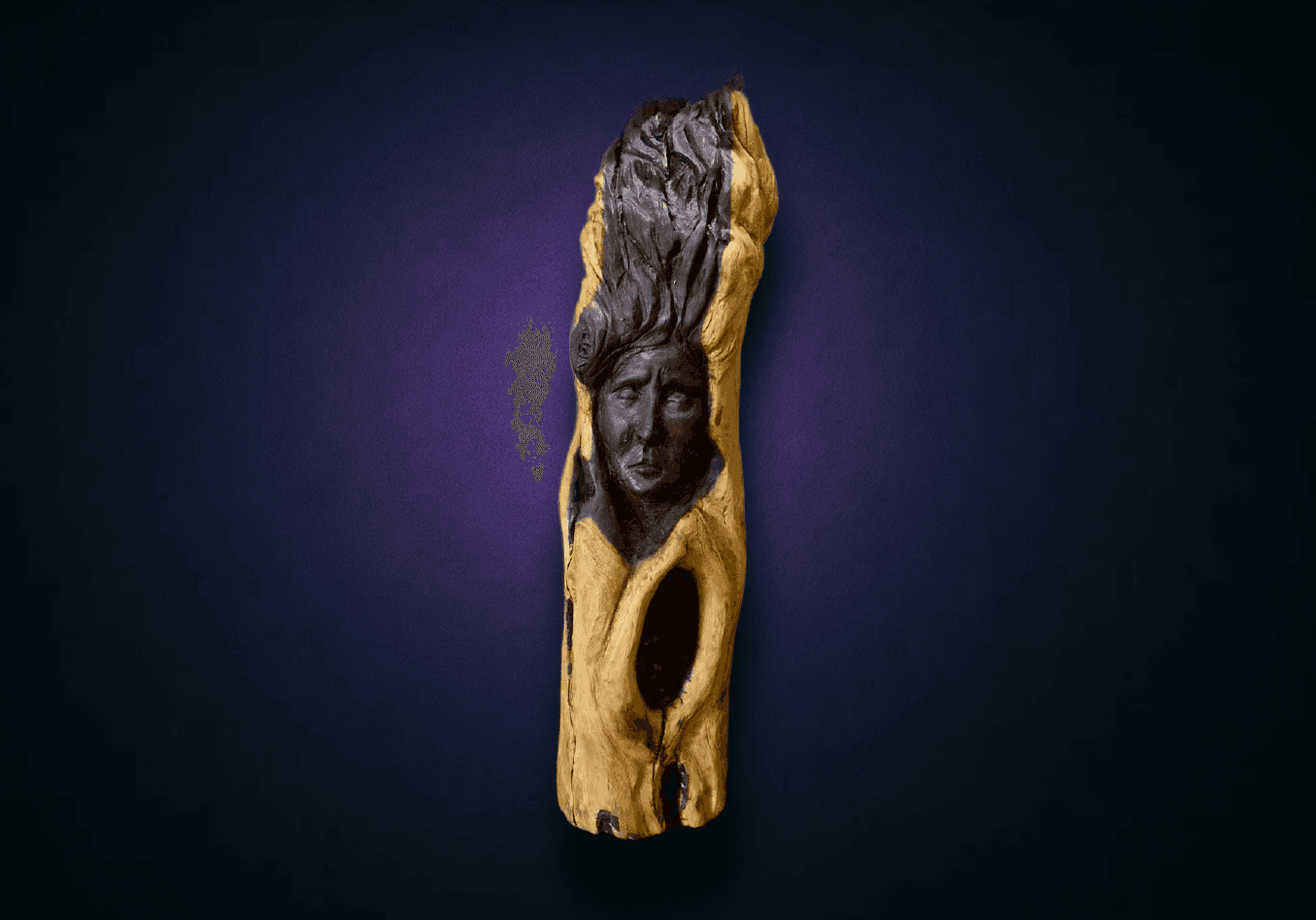
A self shaped by many faces, a memory carried in wood, and an identity that remains an open question. Thaat explores the human condition beyond physical likeness, where the visible form reveals only fragments of an inner existence.
Thaat (2026) is a contemporary figurative wood sculpture by Saudi artist Khalid Al-Shadadi (Sarab), hand-carved from a naturally dried Conocarpus trunk.
The work brings together multiple human faces within a single organic form. Their expressions emerge at varying degrees of abstraction, while an elongated, featureless head rises from the trunk, suggesting a human presence that transcends conventional anatomy.
Rather than representing a single individual, the sculpture explores the complexity of identity, the multiplicity of human experience, and the uncertain boundaries between what we reveal, what we conceal, and what we may never fully understand about ourselves.
Created in literary dialogue with Majmouat Insan (A Group of People), a poem by Prince Khalid Al-Faisal, the sculpture reflects upon the paradox of guiding others while remaining uncertain of one's own direction.
The original cracks, bark, and natural irregularities of the wood have been deliberately preserved, allowing the material's history to remain inseparable from the sculptural narrative.
Thaat enters into a conceptual dialogue with Majmouat Insan (A Group of People), a poem by His Royal Highness Prince Khalid Al-Faisal.
The verse:
“I guide those lost along the road, yet wonder where my own path lies.”
captures a central paradox of human existence: the capacity to understand and guide others while remaining uncertain about one's own identity and direction.
The sculpture does not attempt to illustrate the poem literally. Rather, it approaches the same human question through the language of form, material, shadow, and silence.
الاقتباس
معرض الصور


In Thaat, the human figure is neither complete nor confined to a recognizable anatomy. Faces emerge from the wood as traces of different lives, emotions, and unspoken stories. Each suggests a distinct human experience, yet none claims to define the whole.
The upward movement of the sculpture culminates in a smooth, featureless head, while the lower forms retain varying degrees of emotional expression. The transitions remain fluid, without sharp separations between body, material, and identity.
Natural fractures and an internal passage of light introduce another dimension to the work. Here, emptiness is not an absence but an active sculptural presence.
The wood is not treated as a passive material to be conquered. Its existing structure, cracks, and surface history participate in determining the final form.
Thaat offers no definitive portrait of humanity. Instead, it leaves a question suspended between the sculpture and its viewer:
02
/المزيد