
Literature & Memory
Khalid Al-Shadadi
7 min
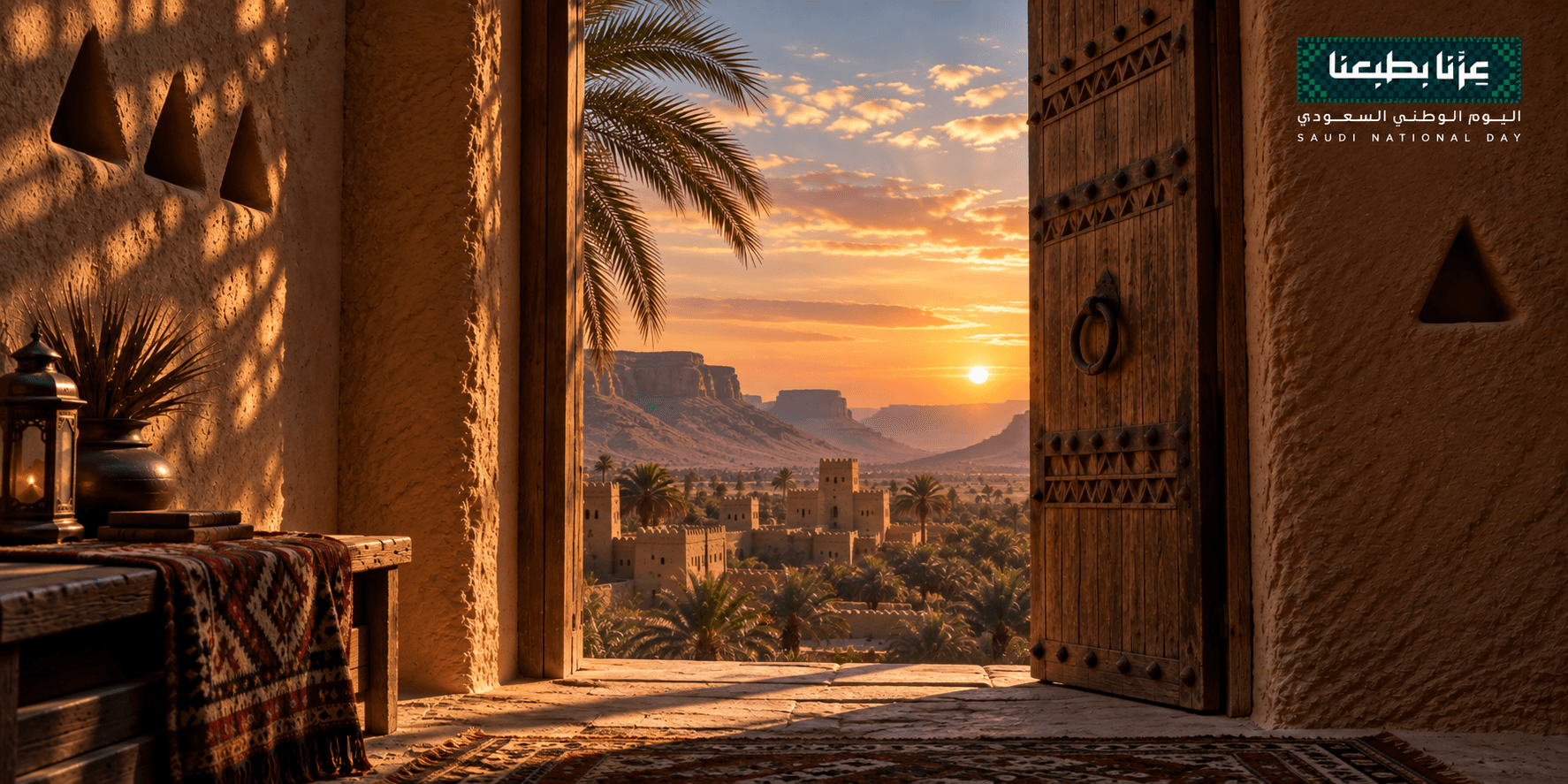
There are things we know before we know their names.
The scent of earth after rain. A voice drifting from a distant gathering. A road so familiar that we know its bends even in the dark. A word whose sound tells us something of the people who speak it. A line of poetry that has lived in memory for so long that we can no longer remember when we first heard it.
We rarely ask why such things remain with us. They seem small, ordinary even—things we may have passed a thousand times without ever stopping to notice.
Yet over the years, they gather somewhere within us. Some come from childhood. Some are inherited from those who came before. And some have been with us so long that we no longer know when they became part of who we are.
Then we move away a little. The place changes. The years pass. And we discover that those details were never as fleeting as we imagined.
They had been quietly drawing a place within us—one no distance could measure.
A place that knows us before we know it.
We do not all carry our homelands in the same way.
One remembers an old house; another remembers his father standing at its door. One looks upon the desert and remembers its vastness; another hears within that vastness a voice known since childhood. Two people may pass through the same place and carry away entirely different homelands.
Perhaps, then, a homeland is never a single image.
It is a thousand images that do not match, yet somehow recognise one another.
They gather in memory until what is personal becomes part of something larger: a family story, the dialect of a city, the name of a village, a poem known by many, a song from another time, a custom whose beginning no one remembers, a way of welcoming, another of saying farewell.
And with the years, it becomes difficult to know precisely where our memory ends and the memory of place begins.
We imagine that we are the ones remembering it.
Perhaps, in some way, it remembers through us as well.
For we inherit more than place.
We inherit ways of seeing it.
We inherit the words with which those before us described it, the stories told about it, the names given to its things, and the meanings that gathered around its details until some became greater than what they first appeared to be.
This is how a single line of poetry can carry an entire land.
Not because it describes its borders, but because it says something its people already know before anyone has to explain it.
An old melody can return an entire age in an instant.
A single word, spoken in the familiar cadence, can collapse the distance no matter how far we have travelled.
Perhaps this is why homeland sometimes feels closer to memory than to geography.
A place can be seen.
A homeland must be felt.
And that feeling does not arrive all at once. It accumulates quietly, almost unnoticed, until it becomes part of us.
Some homelands we inhabit. Others inhabit us, and through them we come to see the world.
And when a homeland lives within us, it begins to appear in things that do not bear its name.
In language and taste. In what we find beautiful without quite knowing why. In the things that awaken reverence in us, and those that give us a sense of familiarity. Perhaps even in the space we leave between speech and silence.
Art may be one of the places where this reveals itself most naturally.
An artist may have no intention of speaking about his homeland, yet the homeland finds its way into the work. Not necessarily through a flag, a landmark, or an immediately recognisable symbol, but through an eye taught to see beauty in a particular way; through a memory filled with certain images; through a word left behind by a poem; through a feeling that knows where it came from, even if it cannot remember when it began.
This is why a work of art can be deeply local and profoundly human at once.
When a person approaches, with honesty, the place that shaped him, he does not necessarily close himself within it. He may instead reveal something another person can feel without ever having known that place.
They may not know the desert we know, nor the words we carry, but they know waiting, longing, loss and love. Art knows how to carry such things when it finds for them an honest form.
And perhaps here lies one of identity’s quietest paradoxes:
It becomes more capable of reaching others when it does not try to resemble them.
Identity is not an ornament placed upon things to announce where they came from. Nor is it a collection of symbols repeated merely to ensure they are not forgotten.
It is quieter than that.
It appears in the manner before the form, in the voice before the name, in the feeling before it becomes a symbol.
And so, things that truly belong to their place need not raise their voices to prove it.
Sometimes, one need only look a little longer.
You will know.
But homeland is not only what has reached us.
Here, the story changes.
For every generation stands, if only for a brief moment, between what it inherited and what it will leave behind.
We receive things we did not create: language, memory, stories, names, poetry, places, images, and ways of seeing ourselves.
Then we live among them.
We alter some. We add to others. At times we disagree with them. And as we grow older, we come to understand some of them anew.
Then, almost without noticing, we too become part of what others will inherit.
Perhaps this is what makes our relationship with homeland both more beautiful and more demanding.
We are not the last to carry this story.
Nor were we the first to begin it.
We are a chapter within it.
And a chapter need not repeat what came before in order to remain faithful to the book.
It need only know where the story came from, and then add something worthy of remaining.
Perhaps a poem.
Perhaps a building.
Perhaps a work of art.
Perhaps an idea.
Or perhaps a person who, many years from now, remembers some small thing we once did without knowing it would endure.
For homelands, in the end, do not live in great things alone.
They live also in the details that never enter the books.
In voices that disappear.
In houses that change.
In words that remain.
In things we keep without quite knowing why.
And in that strange feeling by which one place, among all the places on earth, seems able to say to us without speaking:
You know me.
Perhaps this is why, when a day comes on which we celebrate our homeland, the point is not to remember it for a single day.
We never forgot it.
It is present in the language in which we think, in the images we carry, in the poetry that stayed with us, in the things we love, and in the way we look upon what has been and what is yet to come.
And so the more beautiful question is not:
What has our homeland left to us?
There is more of that around us than we could ever count.
But rather:
What of us will remain within it?